


2026.09.25
鮮魚情報
Octopus and Hangeshō (the 11th Day after the Summer Solstice)
Japan is said to be one of the world's largest consumers of octopus.
What is your favorite way to enjoy octopus?
With its distinctive chewy texture and rich umami flavor, octopus is a beloved ingredient in Japanese cuisine. It is enjoyed in many forms, from sashimi to takoyaki, the popular octopus-filled snack loved by both children and adults. During the summer, I especially love to eat octopus in a vinegar-based salad.
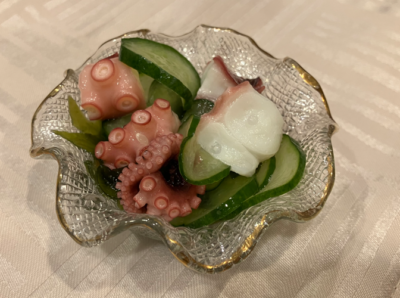
Several species of octopus are commonly consumed in Japan, including Madako (common octopus), Iidako (ocellated octopus), Tenagadako (long-armed octopus), Mizudako (North Pacific giant octopus), and Yanagitako (chestnut octopus). Among them, Madako is the most widely eaten. It inhabits not only the waters around Japan but also the shallow coastal areas of warm seas throughout the world.
In many countries, octopus was not traditionally eaten and was sometimes referred to as "devil fish." Even in Mauritania, one of Japan's major sources of imported octopus, octopus has generally not been a common part of the local diet.
Akashi in Hyogo Prefecture and Sajima in Kanagawa Prefecture are renowned as two of Japan's leading octopus-producing regions. They are a region known for high-quality octopus and are often described as "Akashi in the West and Sajima in the East."
However, domestic octopus catches have declined in recent years, and Japan now relies heavily on imports from countries such as Mauritania, Morocco, China, and Vietnam to meet demand.
The peak season for Madako is generally from May to August. In the Kansai region, there is a long-standing custom of eating octopus on Hangeshō, the eleventh day after the summer solstice. This tradition is believed to have originated from the practice of offering octopus in prayers for a bountiful harvest.
In some regions, octopus is also considered to be in season during the winter months, from November to January. Today, thanks to advances in freezing and processing technology, high-quality octopus can be enjoyed year-round.
As health-conscious consumers increasingly seek high-protein, low-fat foods, octopus has been gaining popularity around the world. Since 2024, global demand for octopus has risen significantly, resulting in supply shortages that have also affected Japan. As a result, prices continue to increase, raising concerns that octopus may become less accessible in the future.
Raw octopus typically has a subdued color, but it turns a vibrant red when boiled. When selecting boiled octopus, look for a glossy appearance and a slightly darker red color. The tentacles should be tightly curled all the way to the tips. For raw octopus, the strength of the suckers is often a good indicator of freshness.
We hope these tips will help you choose high-quality octopus.
Itabashi Trading exports a wide range of octopus products to customers around the world, including octopus that is freshly ikejime-processed on the day of shipment at Toyosu Market, as well as processed products such as wasabi-flavored octopus.
【Contact us】
Itabashi Trading Co., Ltd
Food Department
TEL :+81-3-3248-1016(Workday 10:00~17:00)
FAX :+81-3-3248-1008
Email: shokuhin@itabashi-trading.com